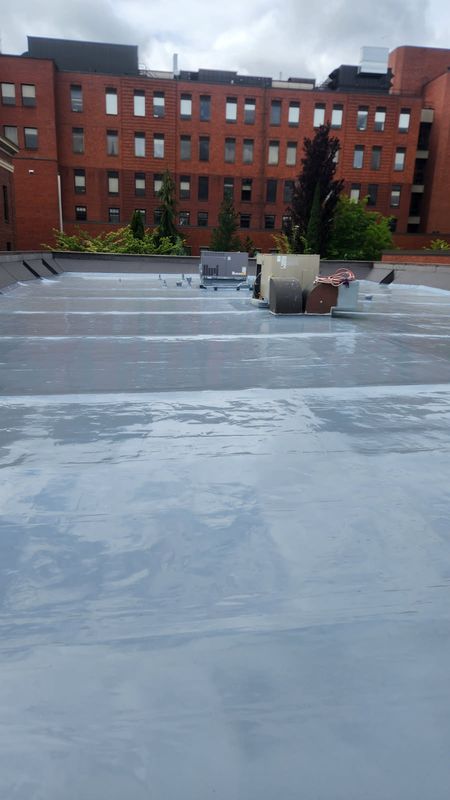
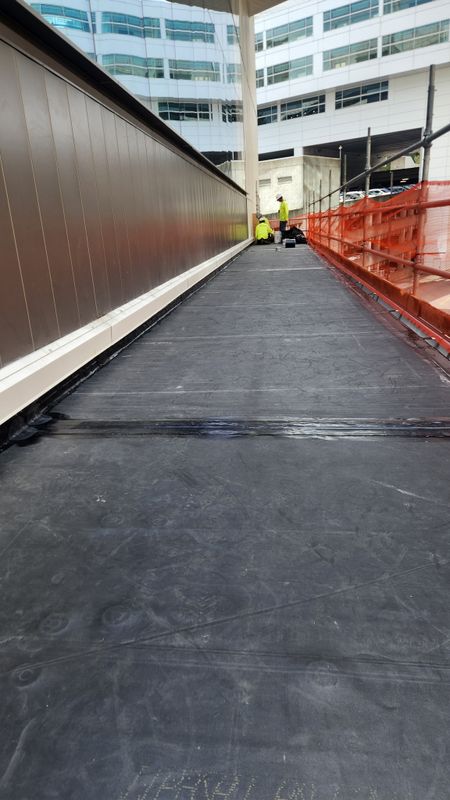
Method 1
Ballasted
The membrane is laid loose over the roof and held in place by weight, such as stone ballast or pavers. The structure has to be able to carry that added load.
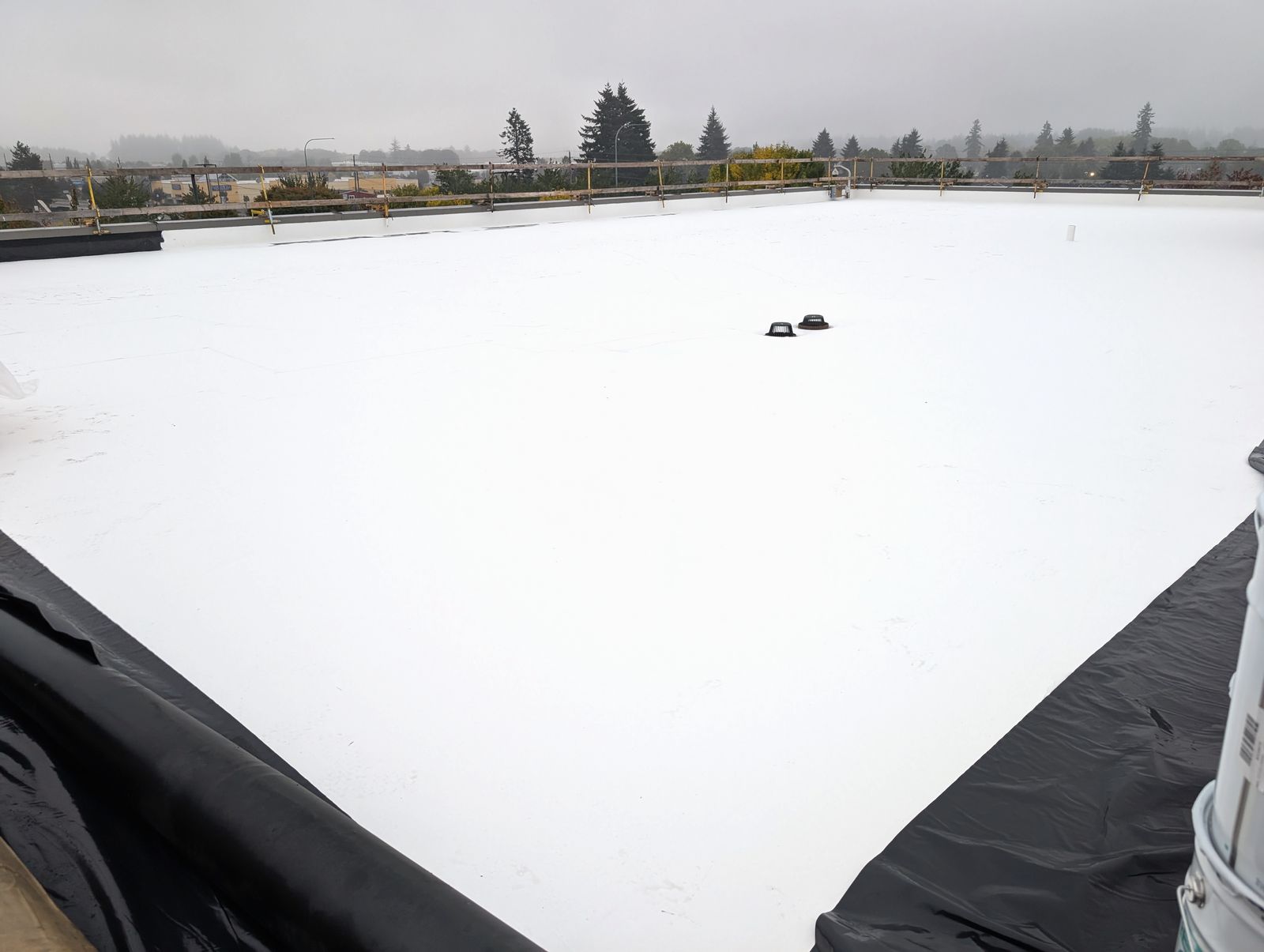
Lightweight, durable, energy efficient membranes for commercial and industrial low-slope roofs. Anderson Roofing installs TPO, PVC and EPDM in Portland and Salem.
The system
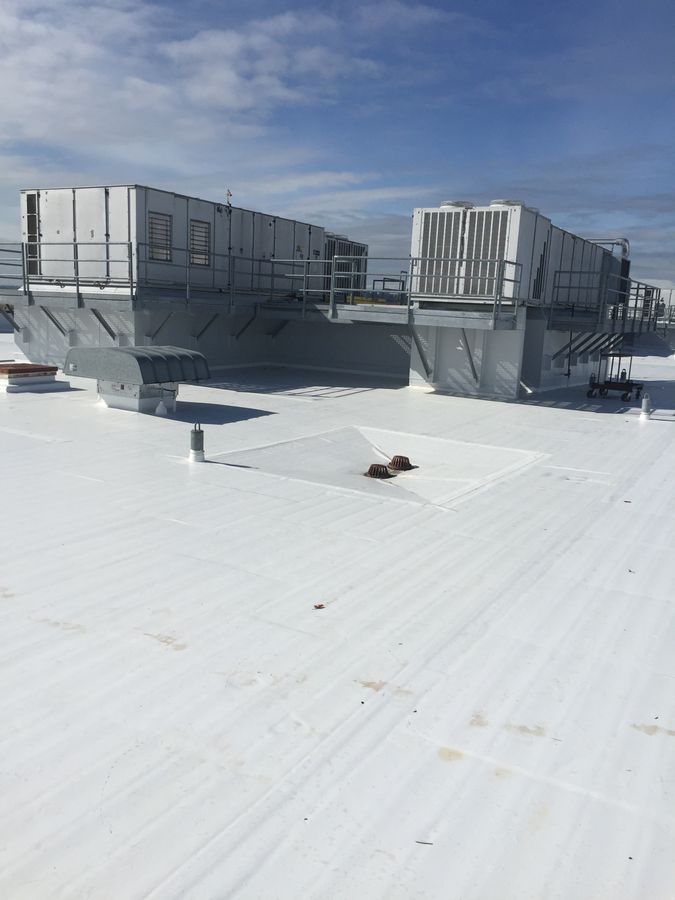
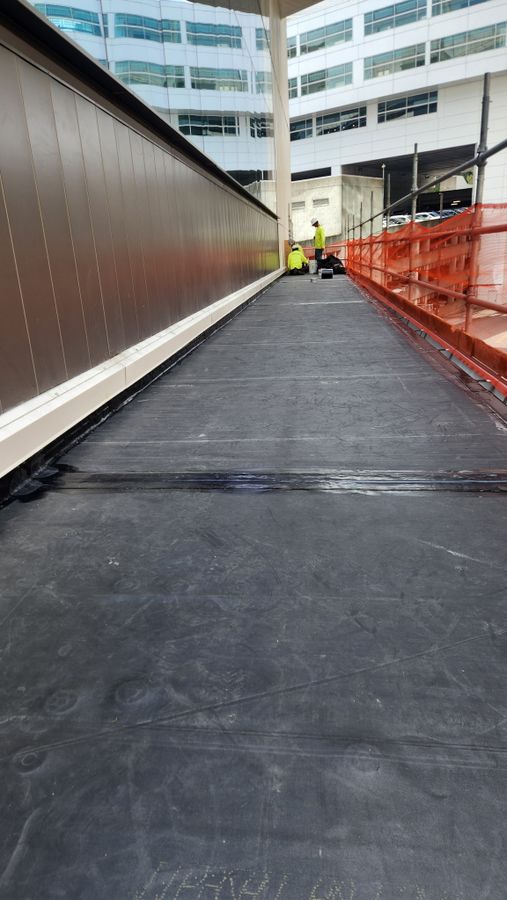
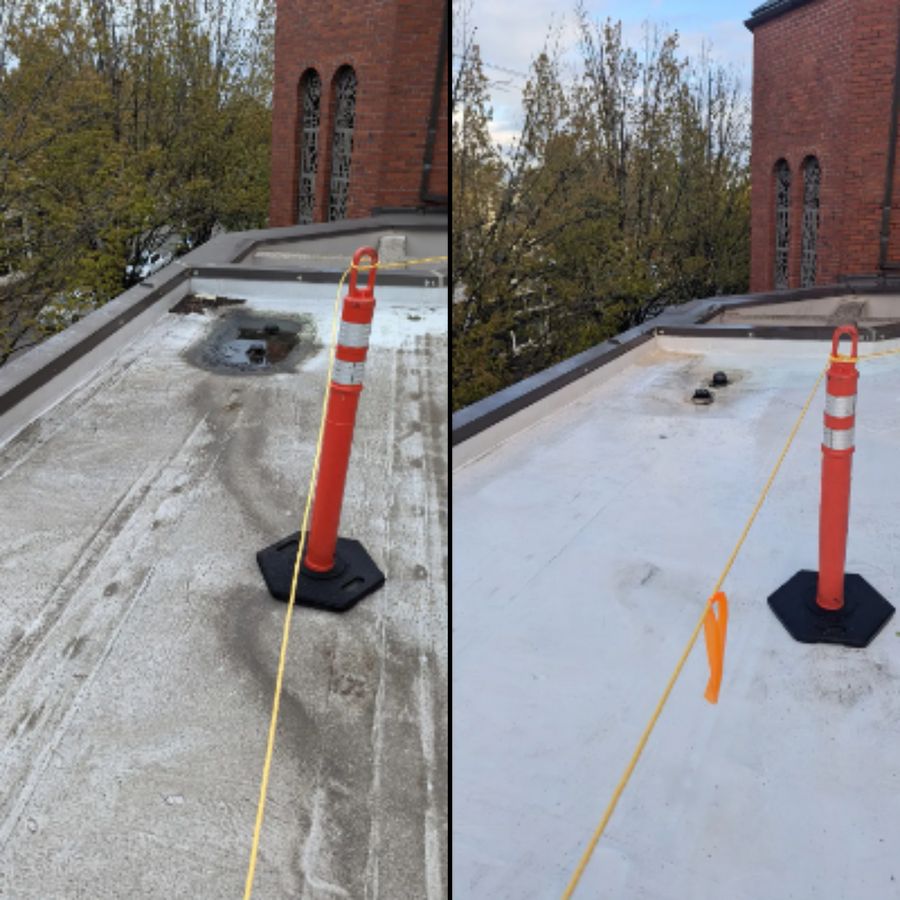
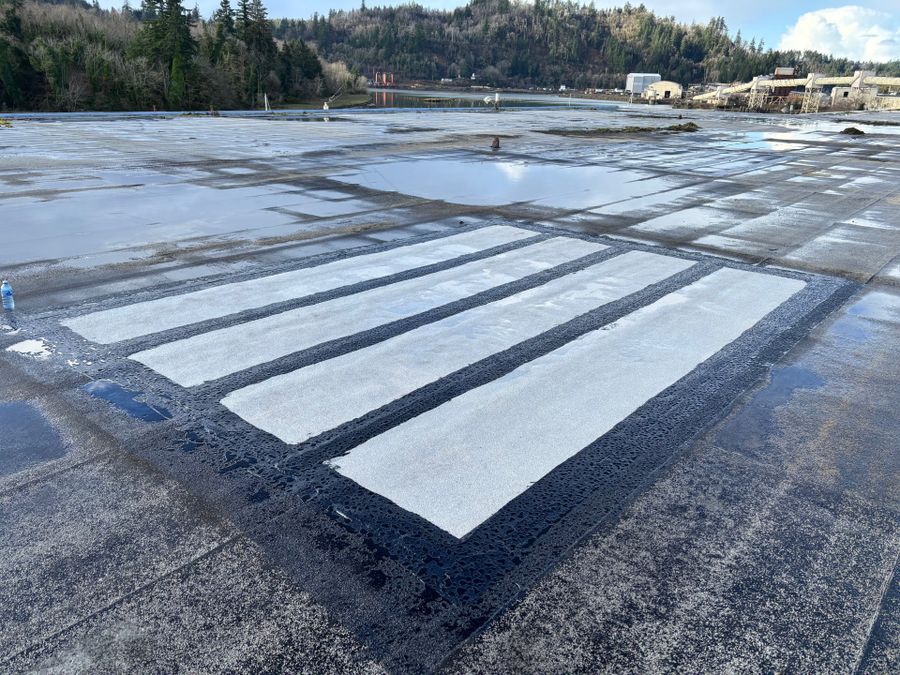
A single-ply roof is a roof covered by one layer of factory-made membrane, laid over the roof deck and joined at its seams. Anderson Roofing installs the three membrane families found on most commercial and industrial low-slope roofs: TPO, PVC and EPDM. These membranes are lightweight, durable and energy efficient, and they keep water out of the building. Unlike a built-up roof, which is assembled from several layers on site, a single-ply roof relies on one membrane.
Three decisions shape every single-ply system: the thickness of the membrane, the way it is attached and the way its seams are joined. Anderson Roofing has been adapting to changes in single-ply membrane systems for over 40 years, and we stay current with each manufacturer's specifications. We install single-ply roofs for facility managers, general contractors and building owners in Portland and Salem.
Single-ply at a glance
System picker
A quick read of the three membrane families. Every row describes the material itself. The right choice depends on the building, so we confirm it on the roof.
| Row | TPOThermoplastic polyolefin | PVCPolyvinyl chloride | EPDMEthylene propylene diene monomer |
|---|---|---|---|
| Membrane family | A thermoplastic sheet | A thermoplastic sheet | A synthetic rubber sheet |
| Typical colour | White is the most common. Tan and grey are also made. | White or light grey are common. Other colours are made. | Black is the most common. White is also made. |
| Seams | Welded with heat | Welded with heat | Joined with adhesive or seam tape |
| What it suits | Roofs where a bright, reflective, energy efficient surface is the goal | Roofs that see grease, oils or chemicals, such as those near kitchen exhaust | Low-slope roofs where a flexible rubber membrane is wanted |
Scroll sideways to compare all three.
Send us the building and the roof type. We will recommend a membrane once we have seen it.
Membrane gauge
Single-ply membranes are available in a variety of thicknesses, including .045, .060 and .080, depending on the needs and wants of the customer.
The bars show the three gauges drawn to relative scale. A thicker membrane is more material between the weather and the roof deck. Which gauge goes on your building is a decision we make with you, together with the membrane and the attachment method.
Thickness is specified to the needs of the building.
Relative scale. A mil is one thousandth of an inch, so .045 is 45 mil, .060 is 60 mil and .080 is 80 mil.
Attachment
Single-ply membranes can be ballasted, mechanically attached or fully adhered. Each method suits a different deck and building, so the choice is made for the roof in front of us.
Method 1
The membrane is laid loose over the roof and held in place by weight, such as stone ballast or pavers. The structure has to be able to carry that added load.
Method 2
Fasteners and plates secure the membrane to the roof deck, typically along the seam overlaps. The sheet is anchored through the roof rather than weighted down.
Method 3
The membrane is bonded to the substrate across its whole surface with adhesive, so the sheet lies flat with nothing on top of it.
Seams
Depending on the product type, single-ply seams are joined by welding or by adhesive.
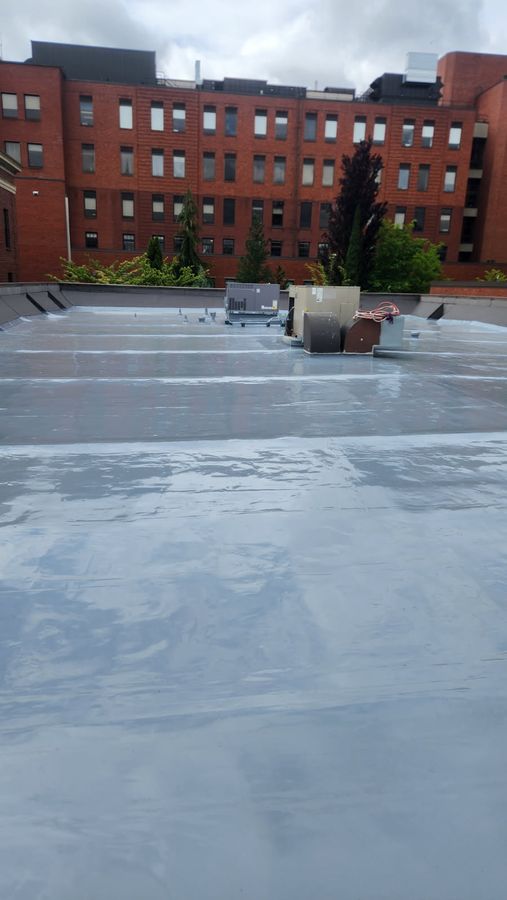
Portland and Salem
Local band
Anderson Roofing has been adapting to changes in single-ply membrane systems for over 40 years. We continue to stay updated on advancements in the products and on each manufacturer's specifications, so customers get the most stable, quality systems.
Founded in 1952. 75 employees, with crews averaging 10 years at the company.
Active, Commercial General Contractor Level 1. Oregon CCB record: no complaints in the past 10 years. Check the Oregon CCB record
Public Works bonded since 2006, which is why we can bid schools, campuses and public agencies.
BBB Accredited since 2019. See our BBB profile
“Anderson roofing is an all around great company to work with. … I am a commercial superintendent and sub contractors are sometimes the hardest part of my job. This is not the case with Anderson I call they give a honest fair price and show up when they say they are going to. … Scott and Frank showed up knew what needed to be done and completed the job with top craftsman ship and super fast all the time following all the safety requirements of a commercial project.”
Jasen King - Google - Sep 20264.9 average across 15 Google reviews. Read the reviews
Certified installer for
Member of
Questions
The questions facility managers and building owners ask before a single-ply roof goes on.
Other systems we install
The cost depends on the size of the roof, the membrane you choose (TPO, PVC or EPDM), its thickness, how it is attached and what is underneath it. The way to get a number is a free estimate from Anderson Roofing: tell us about the building and we will quote it.
It depends on what the roof faces and what the building needs from it. TPO is commonly chosen for a white, reflective surface, PVC where grease or chemicals reach the roof, and EPDM where a flexible rubber membrane is wanted. Anderson Roofing installs all three and will recommend one once we have seen the roof.
Yes. Anderson Roofing installs single-ply roofs in Portland, Salem, Gresham, Hillsboro, Beaverton, Vancouver, Eugene, Springfield and Bend, and also serves Boise, Seattle and San Jose. We keep fully equipped facilities in Portland and Salem. Tell us where the building is and we will confirm it is within our service area.
A single-ply installation in Portland depends on the size of the roof, the attachment method, the weather and what has to come off first, so the schedule is set once we have seen the building. If a roof is leaking now, Anderson Roofing offers 24/7 emergency service for leak and roof repairs.
Tell us about the building and the roof. Estimates are free.
Monday to Friday 7:00am to 5:00pm. 24/7 emergency service.