Fluid Applied Roofing in Portland, OR
Seamless, high-performance fluid-applied roof systems for commercial and industrial low-slope roofs. Durable waterproofing, excellent adhesion and long-lasting protection, installed by crews who prepare the surface and know the product.
- Founded1952
- Oregon CCB#293, active
- Emergency service24/7
What is a fluid applied roof?
- Chemistries
- PMMA and polyurethane
- Applied
- In layers, each to a specified millage
- Reinforcement
- Polyester, where the system requires it
- Roofs
- Commercial and industrial low-slope
- Installed by
- Anderson Roofing employees trained in surface preparation and the product
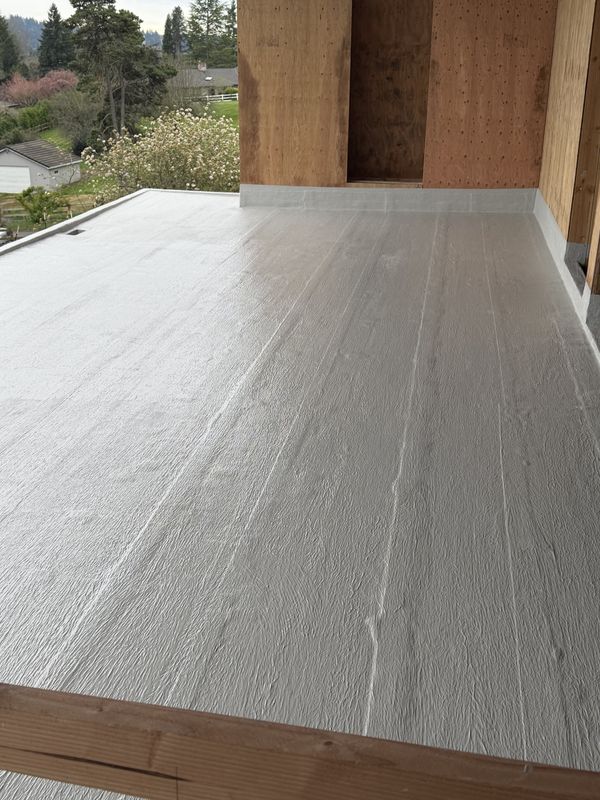
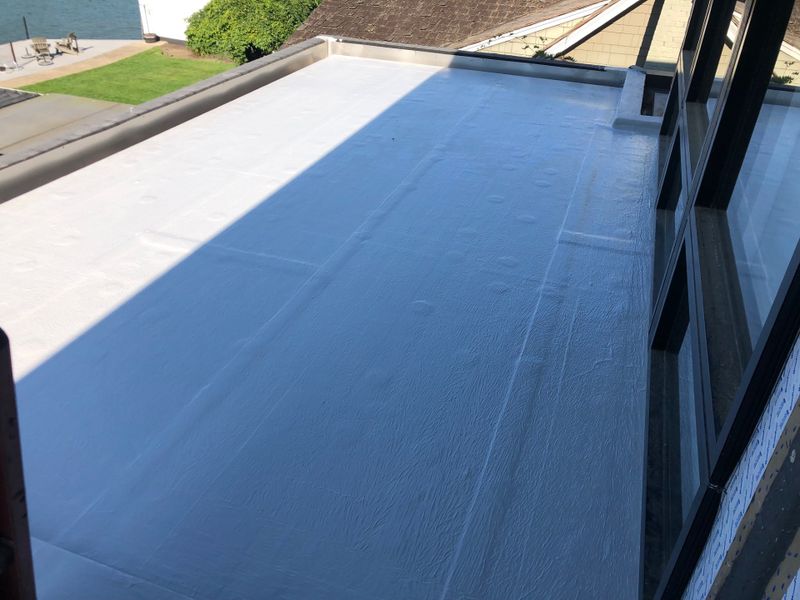
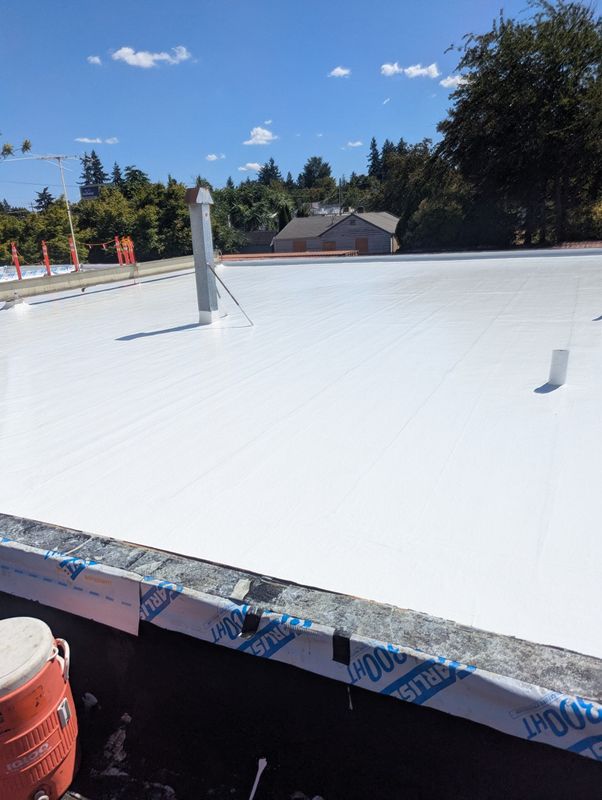
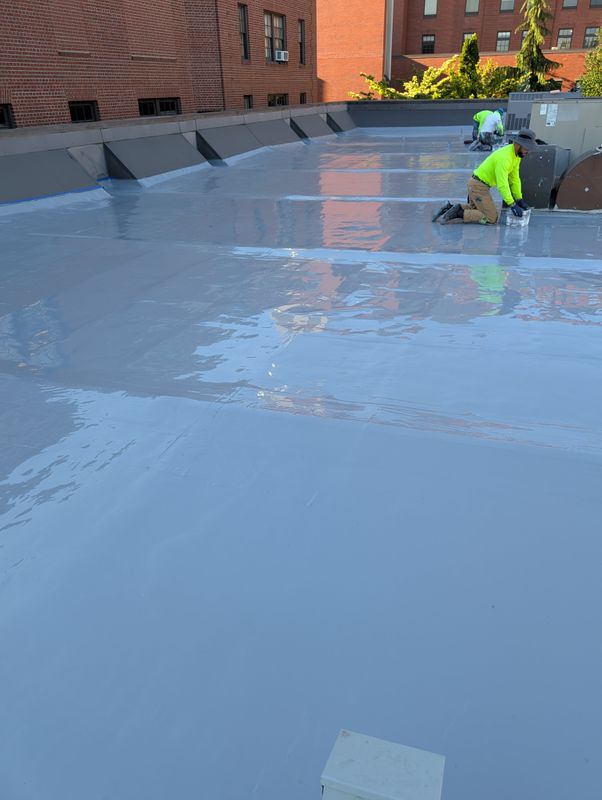
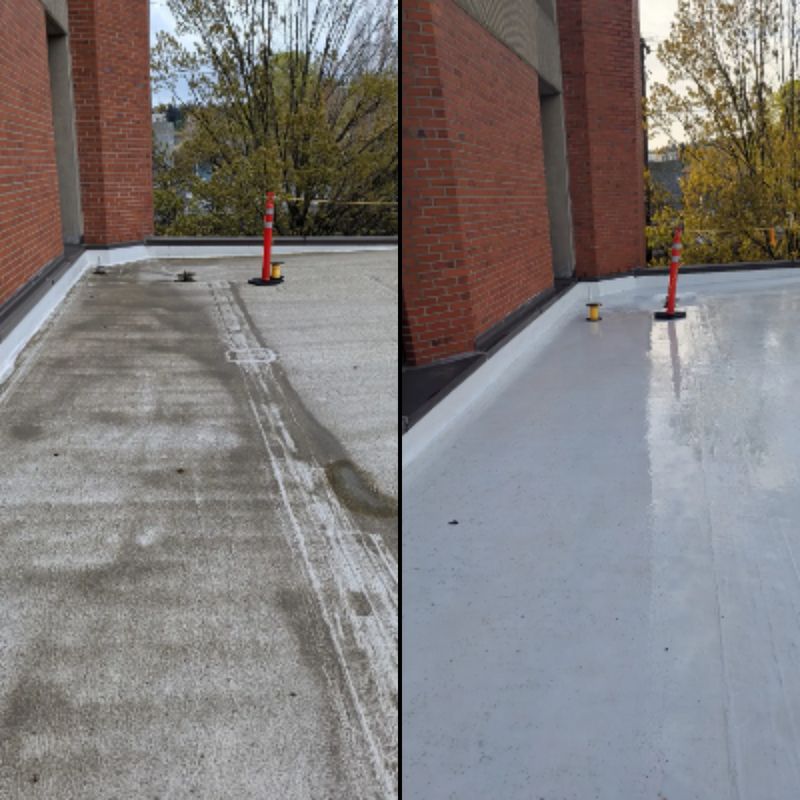
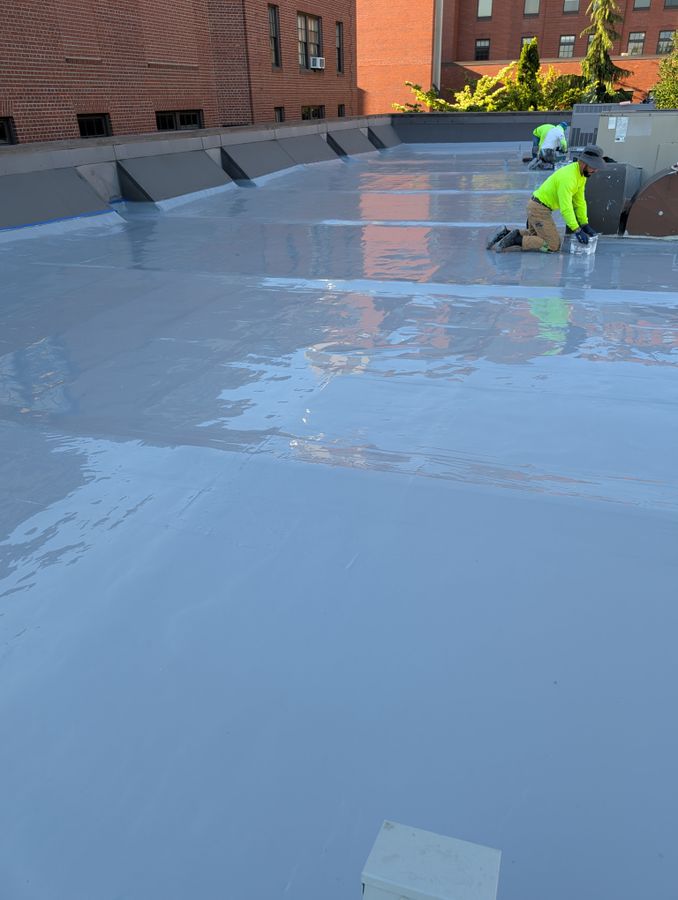
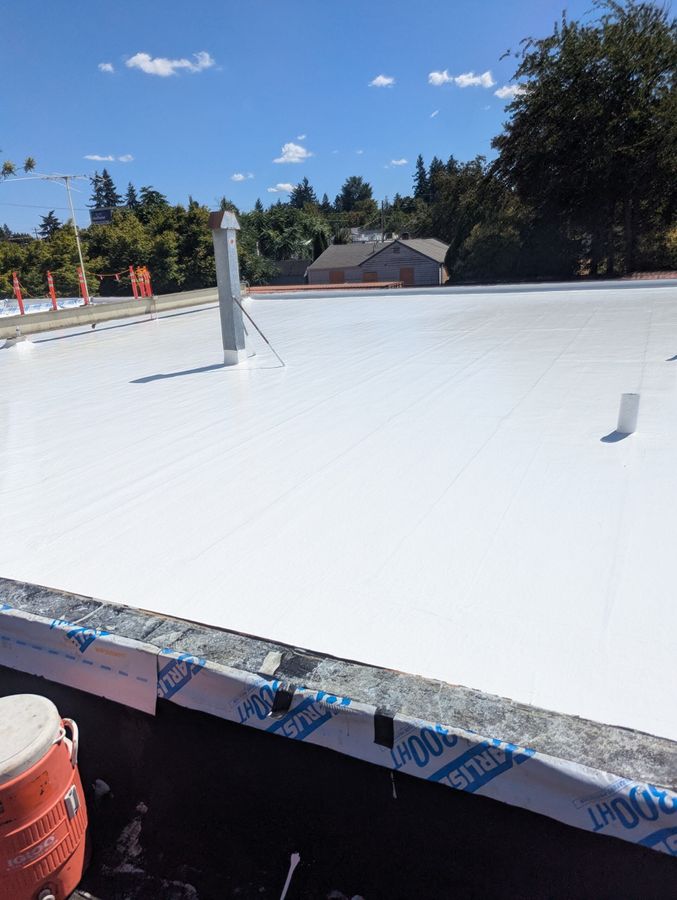
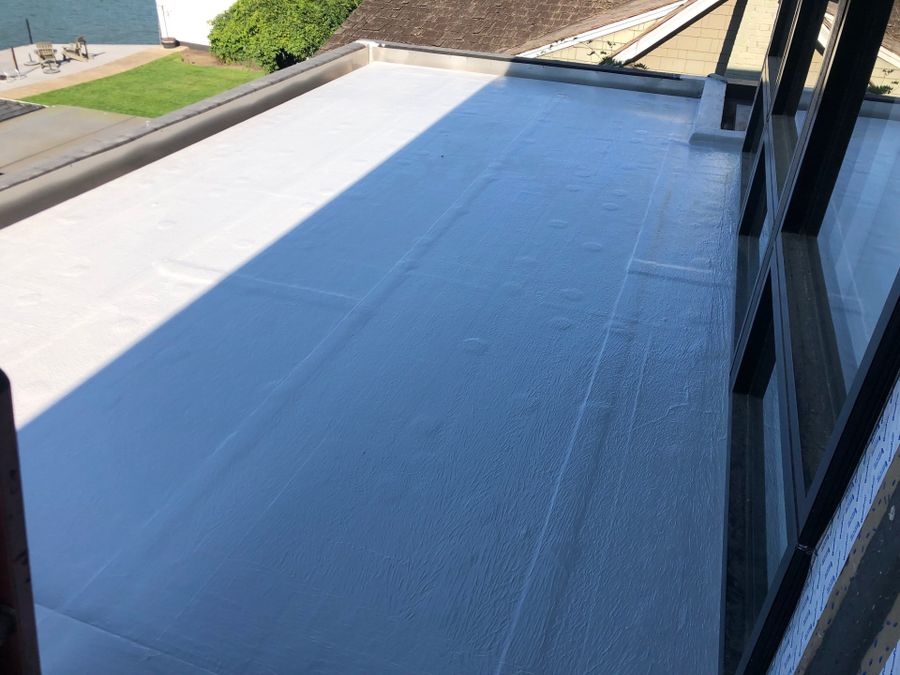
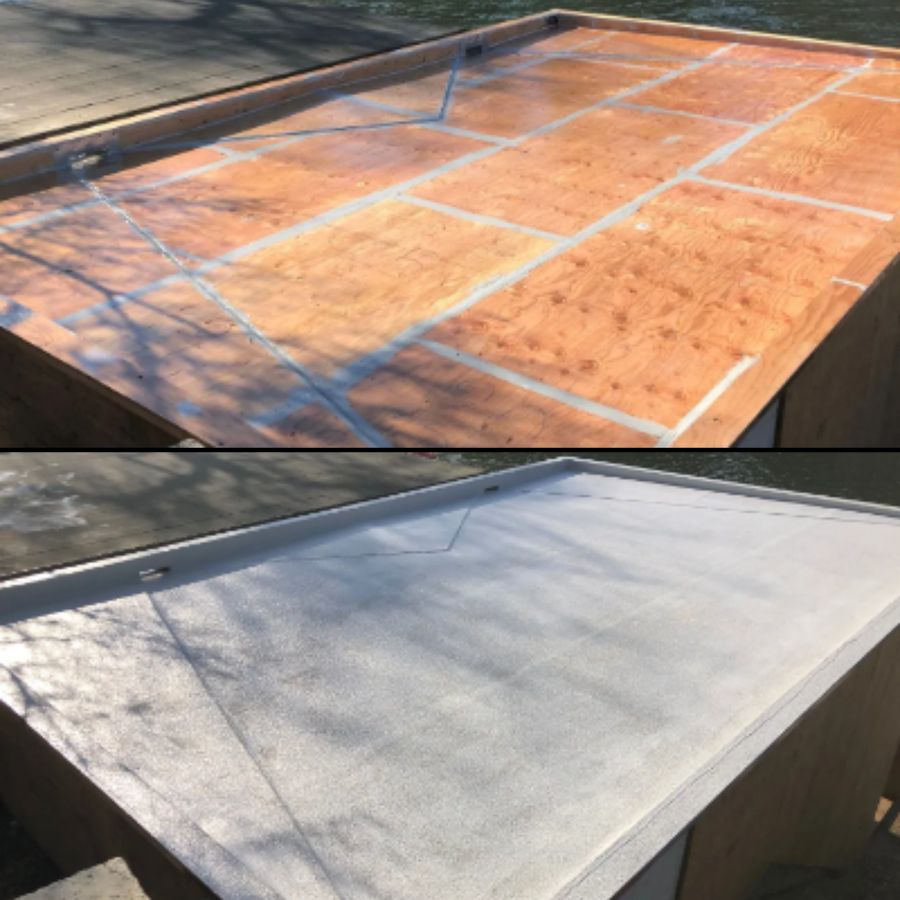
A fluid applied roof is a seamless waterproofing membrane that goes on as a liquid. The material is applied in layers, each to a specified thickness known in the trade as millage, and some systems call for polyester reinforcement worked into the build-up. Because the membrane is formed on the roof instead of rolled out in sheets, it has no laps to seam. Anderson Roofing installs fluid-applied systems, including PMMA and polyurethane, on commercial and industrial low-slope roofs.
There are many types of fluid applied membrane, and the right one depends on the roof. What does not change is the method. The waterproofing product goes directly onto the roofing substrate, so a good result depends on proper surface preparation and real product knowledge. Both are work our employees are trained to do, and both come before the first coat of membrane goes down.
How the layers build up to a seamless membrane
Each layer has a job. The drawing shows the order from the substrate up to the finished surface, with every layer stepped back so its edge can be read.
The thickness each membrane layer is applied at. The specified system for the product sets the figure for every layer.
- SubstrateThe roofing surface the membrane bonds to. The product goes directly onto it, so its condition sets the quality of everything above.
- PrimerGoes onto the prepared substrate before the membrane layers, where the system calls for it.
- Base coatThe first membrane layer, applied to the specified millage.
- Polyester reinforcementFabric set into the build-up on systems that require it. Not every fluid applied system does.
- Top coatThe final membrane layer. It completes the continuous, seamless surface.
Where fluid applied roofing is used
Four kinds of roof show where a liquid membrane earns its place on a commercial or industrial building.
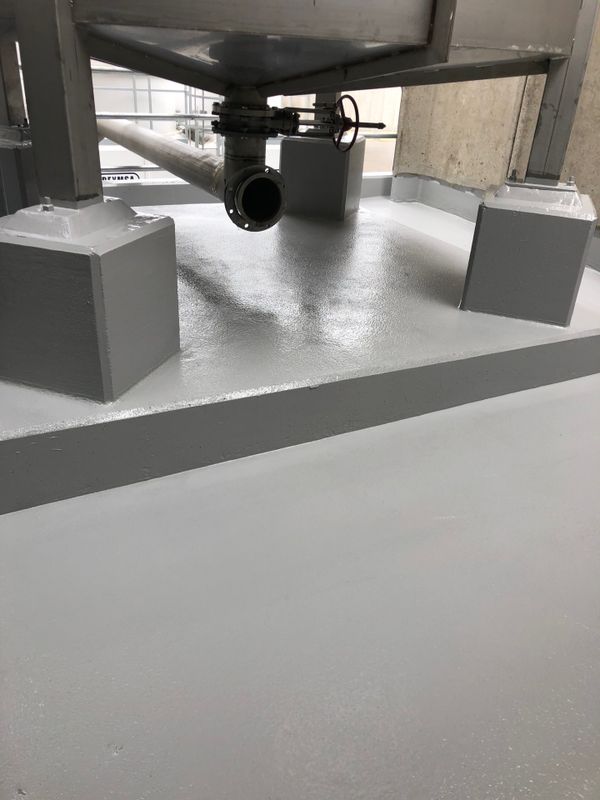
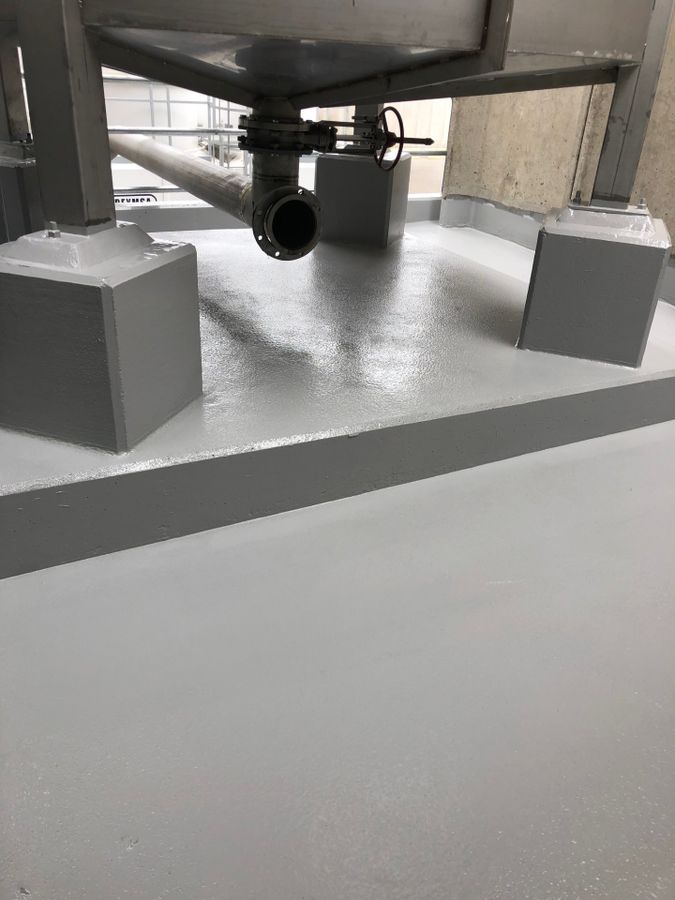
Fire suppression tanks
The small, odd-shaped end of the range. A tank has nothing in common with a flat roof deck, and a liquid membrane takes the shape of whatever it is applied to.
Domed and curved roofs
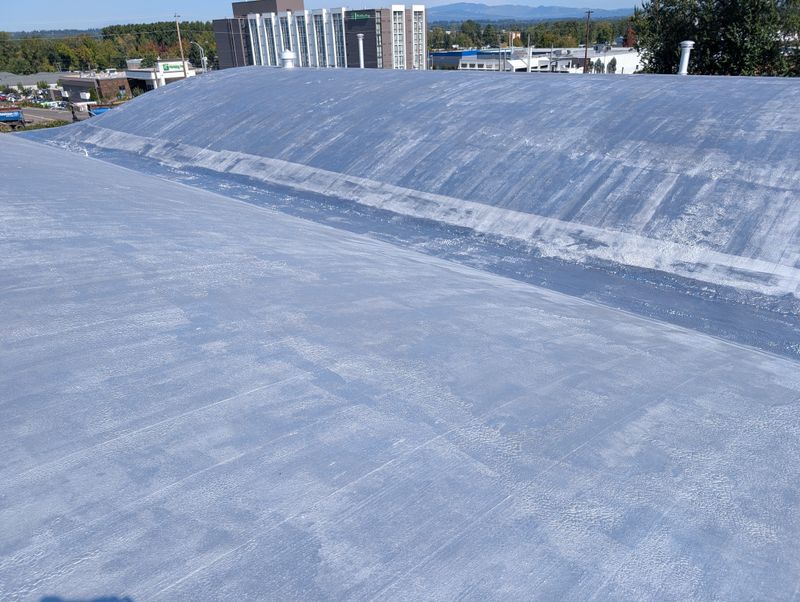
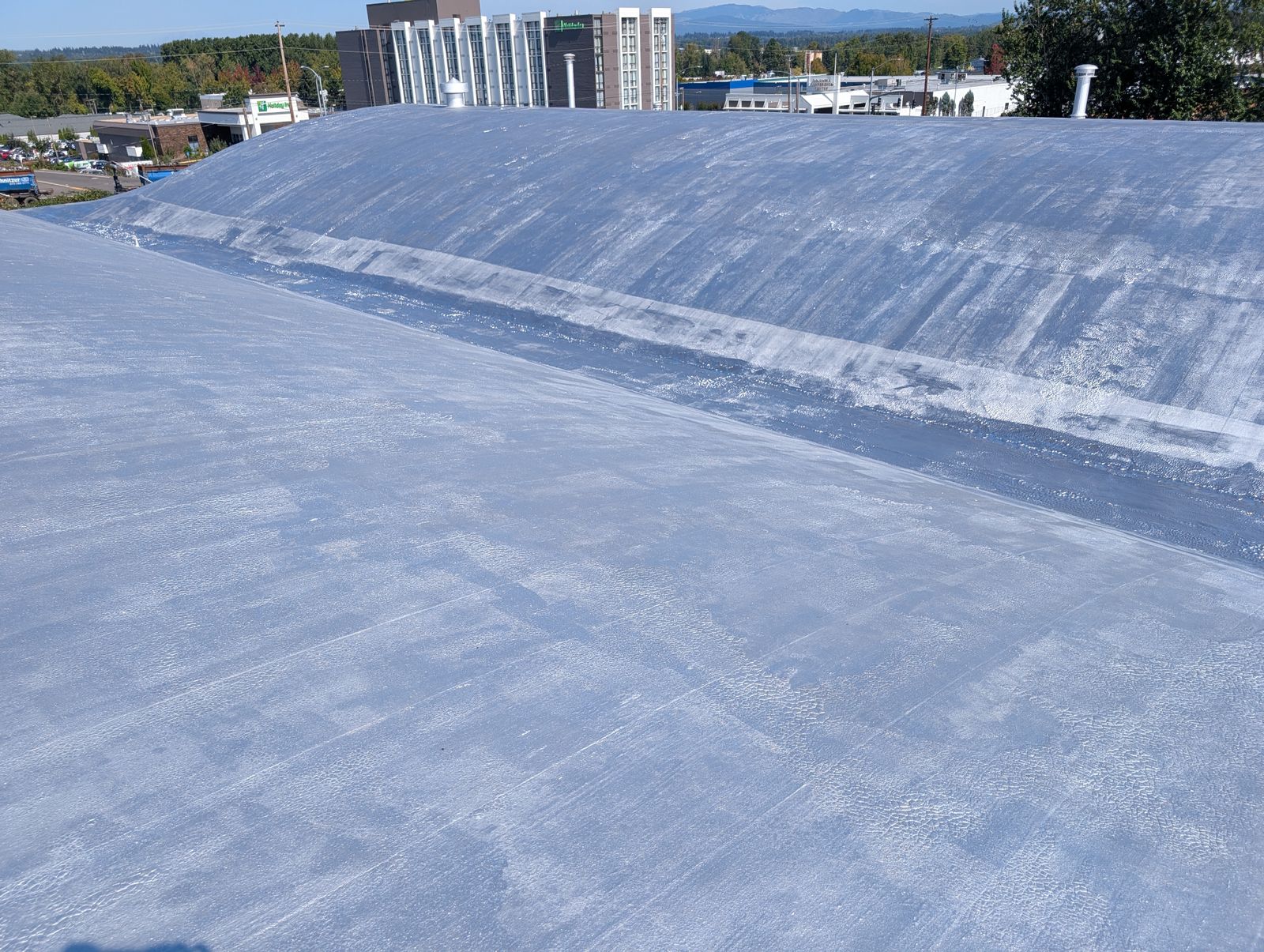
The other end of the same range, all the way up to dome stadiums. With no sheets to cut and lap, a curve is waterproofed as one continuous surface.
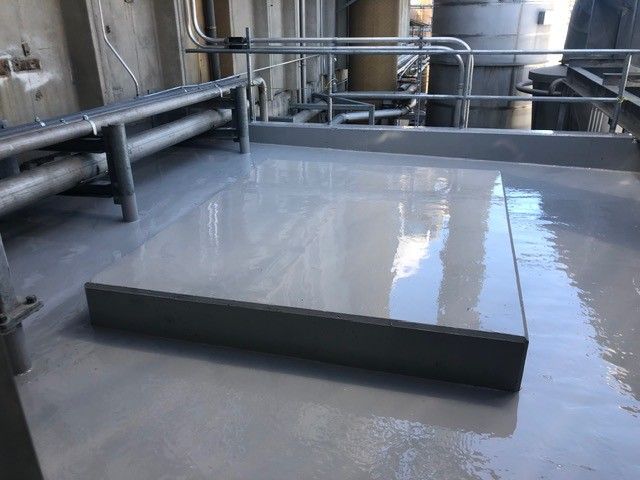
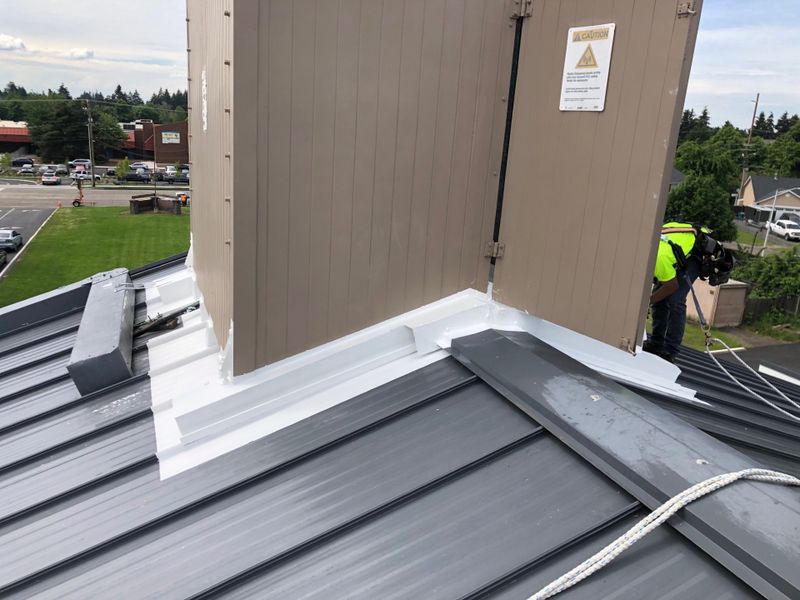
Complex, penetration-heavy roofs
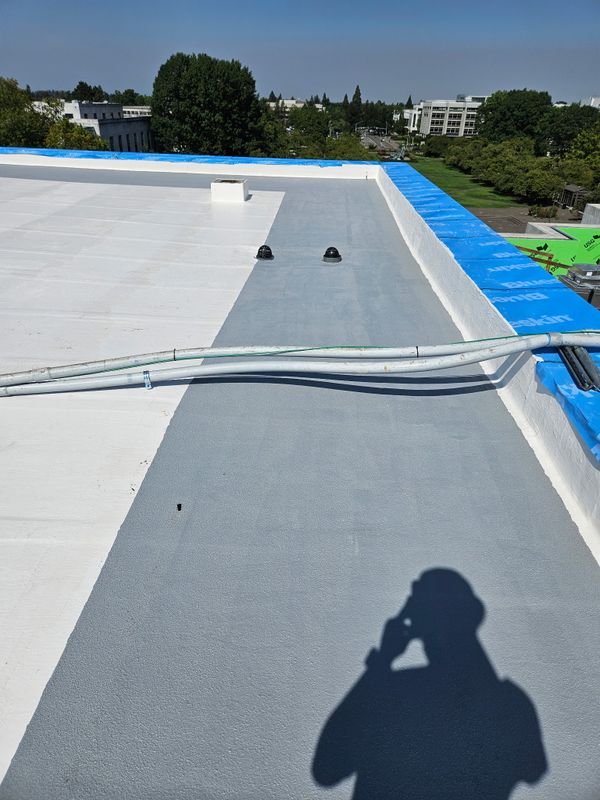
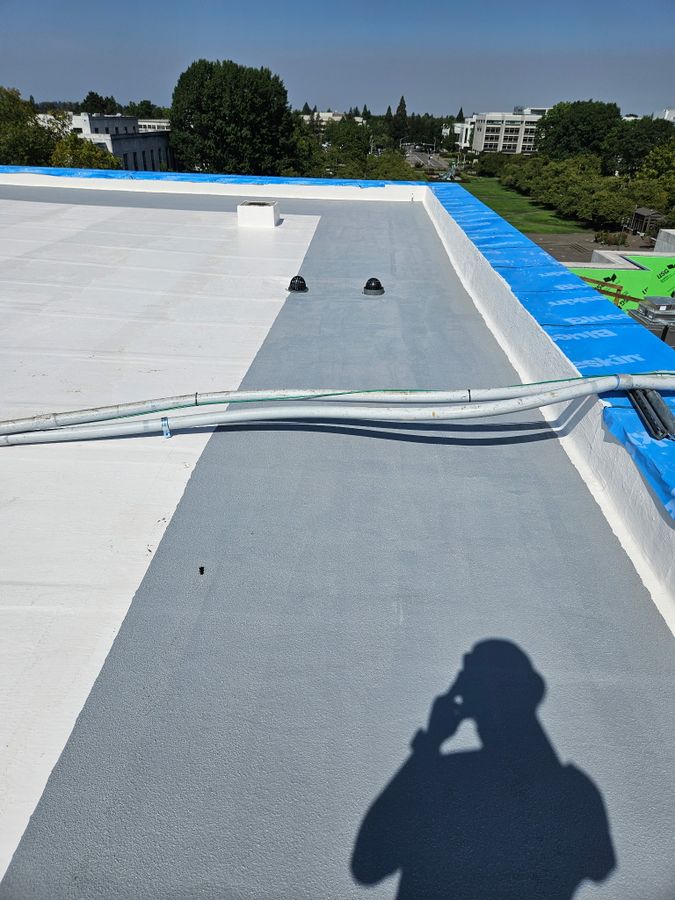
Every pipe, curb, conduit run and drain is another edge to seal. A fluid applied membrane is applied around each one as part of the same surface instead of being cut to fit.
Roofs that must stay in service
Buildings that cannot shut down need a plan, not a surprise. Anderson Roofing crews average 10 years with the company, foremen have 12 to 30 years in the field, and emergency service runs 24/7.
From fire suppression tanks to dome stadiums, Anderson Roofing has been trusted to provide and install high quality waterproof coatings for over 50 years.
Preparation comes before the membrane
A fluid applied membrane bonds directly to the roofing substrate, so the work starts with the surface. Anderson Roofing employees are trained in preparation and in the product, and the job runs in three stages.
Assess and clean the substrate
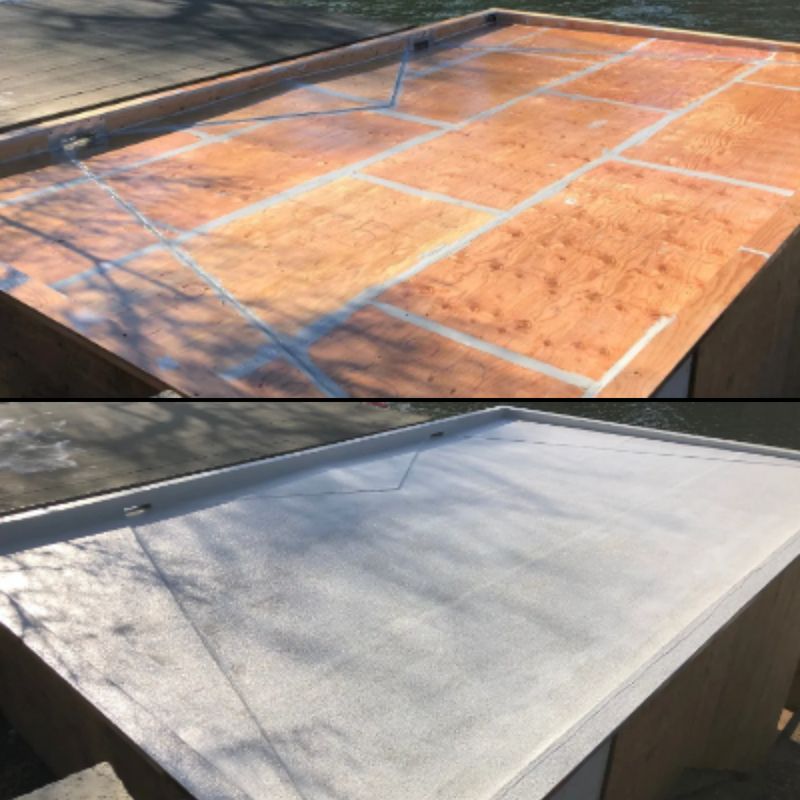
The substrate is looked at first: what it is made of, what condition it is in and what needs repair. Then it is cleaned so the membrane meets a sound, clean surface.
Prime and detail
Primer goes down where the system calls for it. Penetrations, edges and transitions are detailed before the field is coated, and polyester reinforcement is set in where the system requires it.
Apply in specified layers
The membrane goes on in layers, each to the specified millage, until the system is complete. Layer count and thickness follow the specified product, not a guess on the day.
Weighing a fluid applied system for a low-slope roof?
Anderson Roofing gives free estimates for all our roofing services.
A Portland roofing contractor since 1952
Anderson Roofing works from fully equipped facilities in Portland and Salem, for facility managers, general contractors, building owners and public agencies across the region.
- Oregon CCB#293, active. Commercial General Contractor Level 1, first licensed in 1972. Look it up
- Public worksPublic Works Bonded since 2006. It is why we can bid schools, campuses and public agencies.
- CCB recordOregon CCB record: no complaints, civil penalties or administrative suspensions in the past 10 years.
- BBBAccredited since 2019, rated A+. See the BBB profile
- Google4.9 average across 15 Google reviews.
Service areas
- Portland OR
- Vancouver WA
- Eugene OR
- Salem OR
- Gresham OR
- Hillsboro OR
- Beaverton OR
- Bend OR
- Springfield OR
- Boise ID
- San Jose CA
- Seattle WA
“Their communication and responsiveness are unmatched, but what truly set them apart was how they handled a difficult logistical situation. ... They stepped up immediately, took complete ownership of that manufacturer relationship, and managed it flawlessly behind the scenes so I didn't have to stress. ... Their craftsmanship is exceptional, their ethics are untarnished...”
Fluid applied roofing questions
Straight answers on systems, cost, preparation and where we work.
Which fluid applied systems does Anderson Roofing install?
Anderson Roofing installs fluid-applied roof systems, including PMMA and polyurethane, on commercial and industrial low-slope roofs in Portland and the surrounding region. These membranes are applied in layers to a specified millage, and some need polyester reinforcement. The system is chosen for the roof after it has been assessed, and the estimate explains the recommendation.
How much does a fluid applied roof cost in Portland?
The price depends on the size of the roof, the condition of the substrate, how much detailing it needs and the system specified, so there is no single number. Anderson Roofing gives free estimates for all our roofing services. We assess the roof and provide a detailed estimate at no cost to you.
Why does surface preparation matter for a fluid applied roof?
Because the waterproofing product is applied directly to the roofing substrate, the finished membrane is only as sound as the surface under it. Assessing, cleaning, priming and detailing the substrate are part of the job, and Anderson Roofing employees are trained in surface preparation as well as in the product itself.
Does Anderson Roofing install fluid applied roofs outside Portland?
Yes. Anderson Roofing works from fully equipped facilities in Portland and Salem. Our service areas also include Eugene, Gresham, Hillsboro, Beaverton, Bend and Springfield in Oregon, plus Vancouver WA, Seattle WA, Boise ID and San Jose CA. Request a free quote with the building's location and we will confirm how we can help.
Keep reading
Tell us about the roof.
Anderson Roofing gives free estimates for fluid applied roofing in Portland and across the region. Since 1952, with Oregon CCB #293.
Monday to Friday, 7:00am to 5:00pm. 24/7 emergency service.